Boots for men
The first properly wet October morning decides the same thing every year: which shoes stay in the hallway and which take over for the next six months. More often than not, it is boots. In the colder months they do more than protect against frost and rain – they also make an outfit look noticeably more grown-up. Efficient, really.
Our selection of boots for men covers the three constructions that reliably get you through winter: Chelsea boots you can slip on quickly, lace-up boots with a sturdy tread and insulated winter boots for genuinely cold days. Which one suits you best depends less on taste than on where you will wear them – and that is exactly what we cover here.
The key boot styles at a glance
Three constructions cover almost everything a man needs in winter.
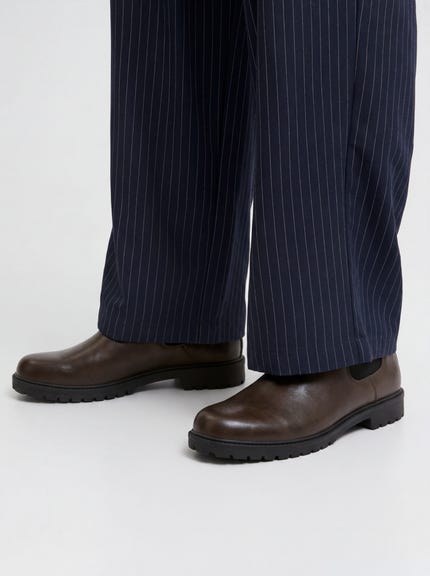
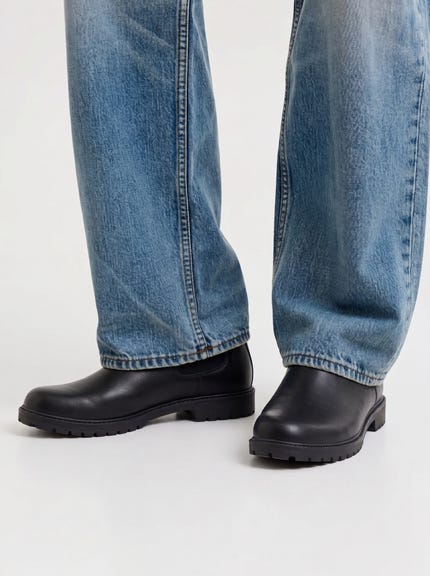
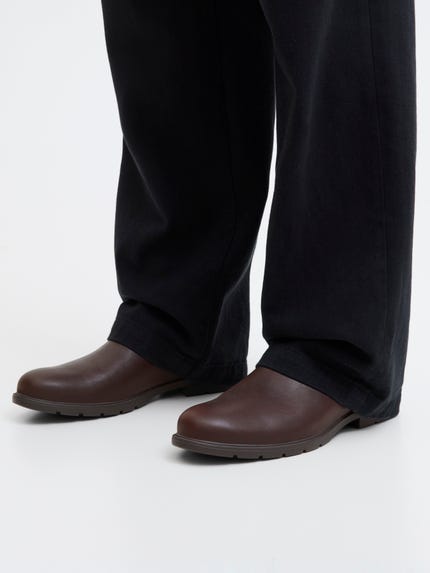
- Chelsea boots are ankle-high, have no laces and feature an elastic side panel on both sides. That makes them quick to get on and off. They are the smartest of the three styles – and the only one that works effortlessly with a suit.
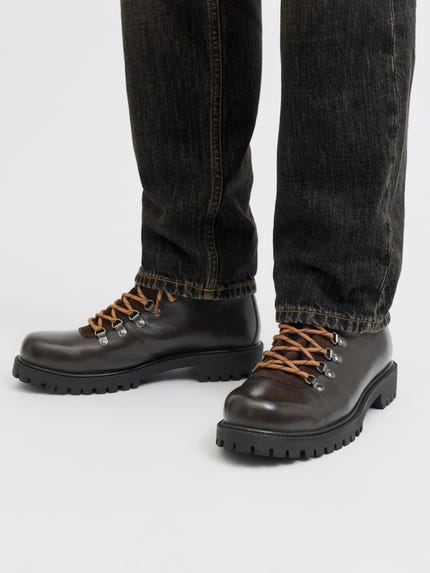
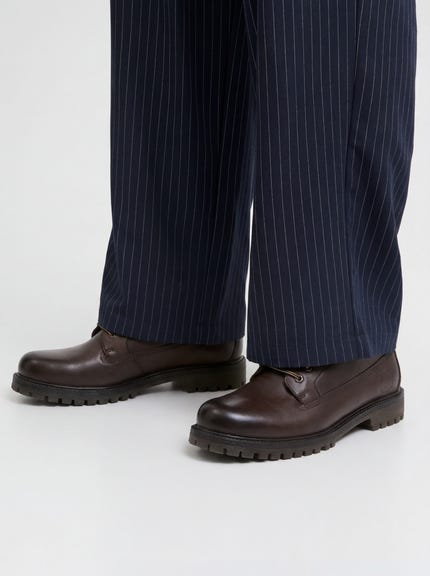
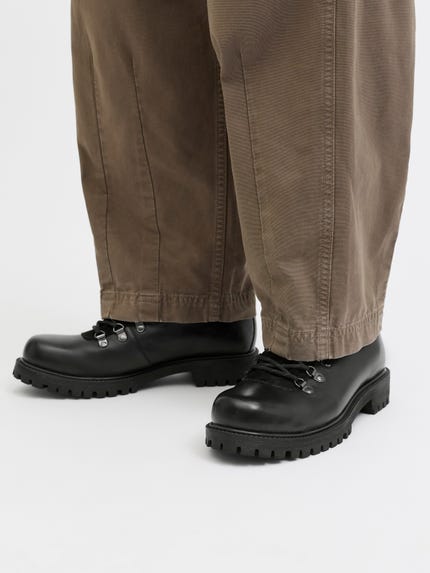
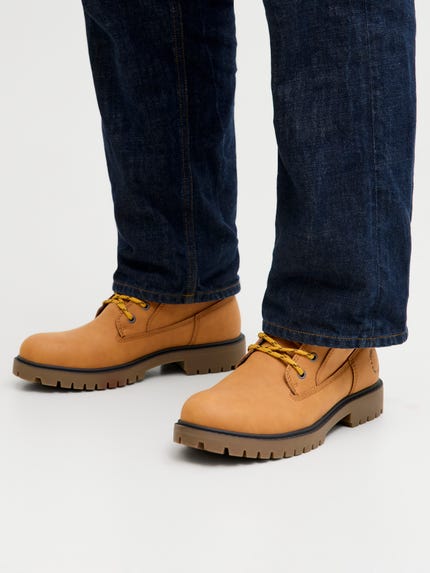
- Lace-up boots give the foot noticeably more support through the lacing and are the most stable choice for longer walks, uneven ground and outdoor activities. Their higher shaft also gives the ankle extra protection.
- Insulated winter boots put warmth first. An insulating lining plus a grippy rubber sole is exactly what matters in snow and freezing weather.
Which men's boots for which occasion?
The most useful buying advice starts with one question: where are you actually going to wear them?
For the commute and the city, Chelsea boots and simple styles in dark colours are the right choice – they work with trousers and a coat without looking like outdoor gear.
A trainer can feel a little too casual in this combination – and when things become genuinely formal, dress shoes take over anyway. For weekends outdoors, walks and days when the forecast promises very little, go for lace-up boots.
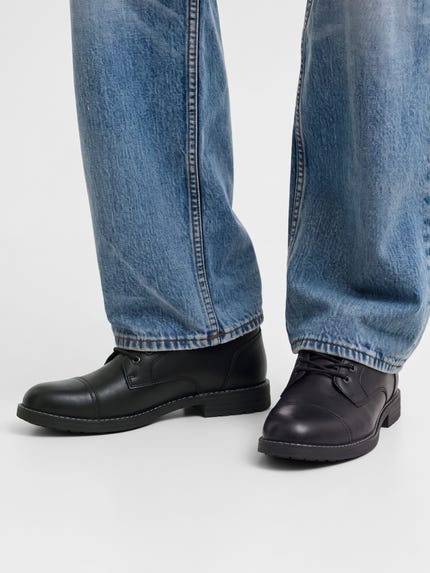
And if you only want one pair: a brown or black boot with a treaded sole and medium-height shaft will cover nine out of ten situations. It is the unexciting answer, but it is the right one.
Uppers on men's boots
With boots, one of the biggest quality differences is the upper material. Smooth leather is durable, easy to clean and, with the right care, often looks better with age – it develops a surface that a brand-new shoe simply does not have.
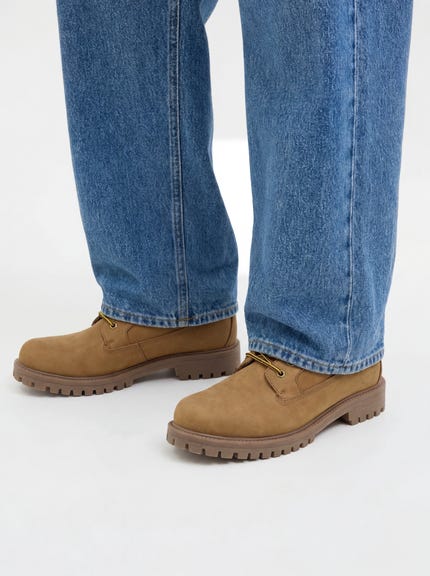
Suede and nubuck have a softer, more textured look, but they are more sensitive to moisture and need regular waterproofing spray. Textile and synthetic components can make a boot lighter and easier to live with day to day.
The exact upper material for each pair is listed in the product description. It is worth checking before you decide on a colour.
Sole, lining and fit of boots
The outsole determines grip. A pronounced rubber tread gives you confidence on wet leaves and slippery ground – flatter soles look smarter but are less forgiving when surfaces get slick. For the lining, genuine leather is breathable and noticeably improves comfort, while warm lining helps keep heat inside the boot when temperatures drop below zero.
One practical sizing tip is surprisingly easy to overlook: winter boots are worn with thick socks. If you try them on in thin socks, it is easy to choose a size that is too small and only notice in January. You can find the measurements in our size guide.
Which trousers work with boots?
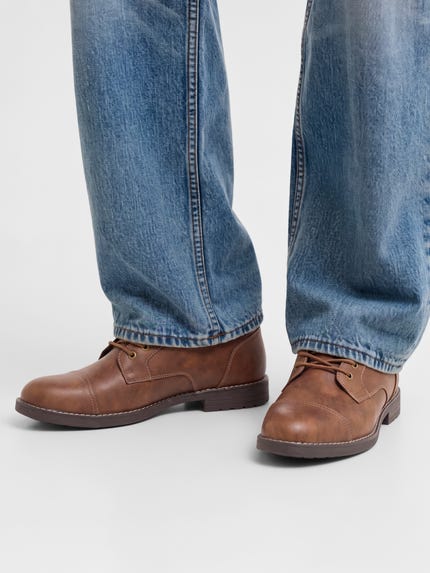
The rule of thumb is simple: the narrower the trouser leg, the more cleanly it sits over the shaft. A slim pair of jeans falls neatly over a boot without fabric bunching up. Brown boots work especially well with dark denim.
Chelsea boots are particularly easy to wear with chinos. With wider trousers, either let the hem rest cleanly on the shoe or turn it up once in a narrow cuff. Anything in between tends to look undecided.
How to style boots
Sturdy lace-up boots work brilliantly with a chunky jumper and a warm jacket – a winter combination that almost puts itself together. Add a parka and you are ready for a day outside.
For a smarter direction, go with black Chelsea boots, dark trousers and a simple top. It is one of the most reliable combinations for evenings when trainers would feel too casual.
Colour-wise, brown remains the long-term favourite and black the most flexible option. Beige and grey are the more interesting alternatives once you already own a dark pair.
Boot care: ten minutes worth taking
Boots are the item in this guide where care genuinely affects how long they last, so here is the short version.
After each wear, remove dust and mud, ideally while dry and with a brush. Polish smooth leather with a suitable cream, and treat suede or nubuck with waterproofing spray before the next wet spell. Leather boots need this care to keep the natural oils in the material and prevent the leather from becoming brittle.
Never put wet shoes directly on a radiator. Let them dry at room temperature, stuffed with paper – that helps them keep their shape and reduces the risk of cracks in the shaft.
Don't forget to explore the rest of our shoes
If you want to cover the whole year, our shoe collection has everything from trainers to sandals for summer. We are confident there is a pair for you.