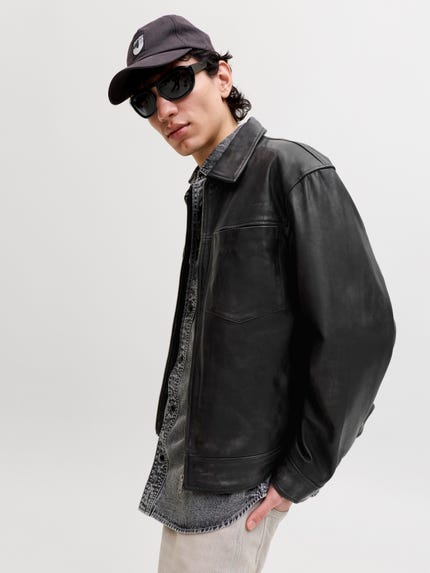
Men's leather jackets
For a long time, the leather jacket stood for just one look: rebellious, loud, a little costume-like. That has changed. Today, it is simply one of the most versatile jackets in your wardrobe – it works just as well with jeans as it does with tailored trousers – and the question is no longer whether it suits you, but which cut does.
Our selection of men's leather jackets ranges from rock-inspired biker jackets to refined suede jackets with a velvety finish – with fly-away collars, band collars, baseball collars or high necks, in black, brown and green.
The biker jacket: the leather jacket with attitude
An asymmetric zip, wide lapels, often a shoulder tab and decorative buttons on the pockets. The biker jacket is the style most people picture first when they think of a men's leather jacket.
It is also the option that makes the strongest statement. That is both its appeal and its limitation: it will never work with a suit, but it almost always works with jeans and a T-shirt. If you are buying a second leather jacket, this is often the one – as a first, it is the bolder choice.
The leather blouson: the most versatile option
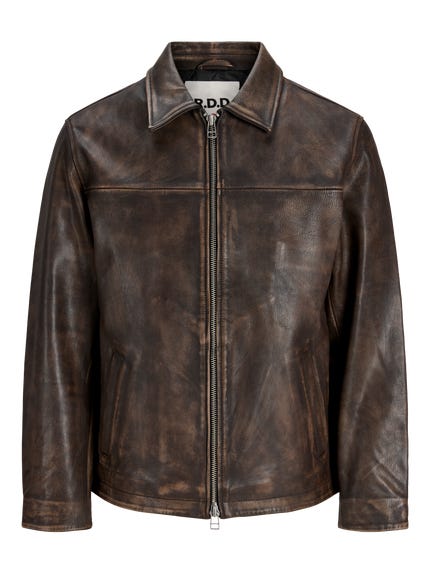
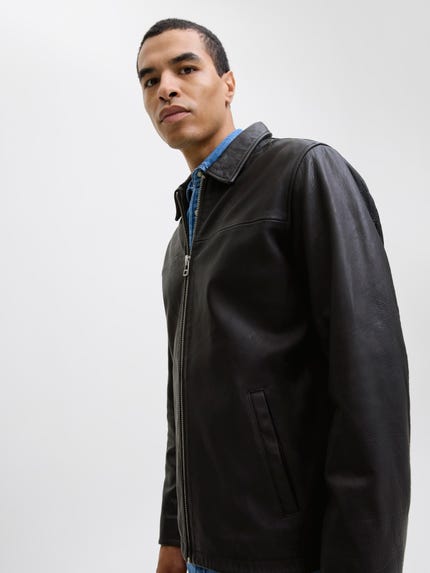
If you only want to own one leather jacket, this is the answer. A leather blouson has a straight, short cut, a central zip and noticeably less hardware than a biker jacket. Smarter, quieter and easier to style in different ways.
A black or brown blouson works just as well with a shirt as with a sweatshirt. That is exactly why it is also the most common construction in our range – the fly-away collar, the largest collar group in our assortment, belongs to this jacket type.
Aviator jackets and quilted styles
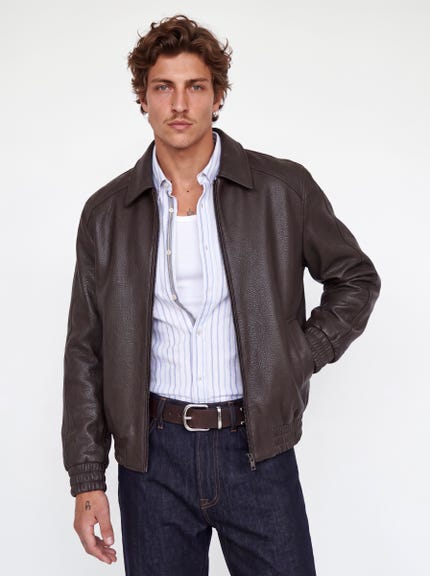
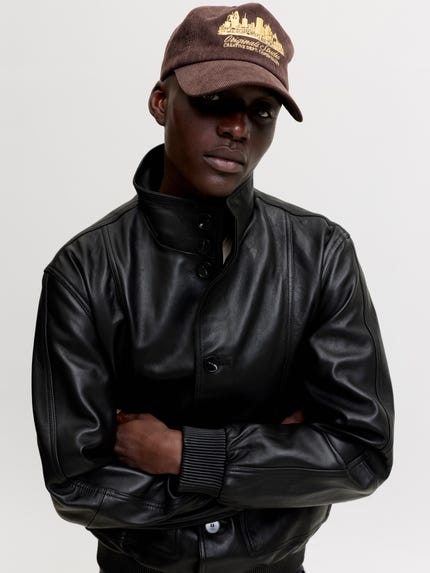
The aviator jacket comes from pilot gear, and its heritage is easy to spot: large flap pockets, ribbed cuffs and hem, and sometimes a shearling-style collar. It is the warmest of the silhouettes and the one with the most character.
Quilted leather jackets are a more recent development. The quilting adds structure and a little more warmth without adding unnecessary bulk – a good middle ground for anyone who finds a classic leather jacket too light for winter.
Leather jackets: why leather is not just leather
Genuine leather is breathable, helps regulate body temperature and develops a patina over the years that no new material can truly reproduce. Lamb leather is especially soft and comfortable, while cowhide is more hard-wearing and therefore a classic choice for biker jackets. Suede has a soft, matte surface and looks gentler and less glossy.
Then there are faux-leather jackets and leather-look styles: lighter and easier to care for. The material used in a specific jacket is listed in the product description – with this garment, it is especially worth checking because it affects the feel, care requirements and lifespan alike.
Fit: where a leather jacket should sit
Leather is unforgiving when it comes to the wrong size because the material does not give like cotton. Three points matter:
- The shoulder seam should sit exactly on the edge of your shoulder.
- The jacket should finish around hip level, or slightly above for blouson styles.
- When zipped up, there should still be room for a thin jumper underneath without pulling across the chest.
A slim fit emphasises the silhouette, while a roomier cut gives you more freedom of movement. You can find the exact measurements in our size guide. One practical note: genuine leather gives slightly after a few weeks – but buying it too big will not improve the fit.
Leather jackets in black, brown or green
Black is the most versatile choice and the largest group in our range – it works for evenings, autumn and with practically any pair of trousers. Brown feels warmer, softer and less severe; a brown leather jacket often looks even better with age because the patina shows more clearly on lighter leather.
Then there is green, the less common option for anyone who already owns a dark jacket and wants something a little different.
How to style a leather jacket
The safest place to start: a white T-shirt, dark jeans and a black leather jacket. This combination has looked good for sixty years, and it will keep doing so for another sixty.
In autumn, add a fine jumper underneath – leather blocks the wind, but it is not especially warm, so the insulation needs to come from your layers. For a more grown-up look, choose a clean shirt instead of a T-shirt and boots instead of trainers. And if you want to wear it to the office, pair it with tailored trousers rather than denim.
Caring for leather jackets properly
Few garments reward proper care as directly as this one – a well-maintained genuine leather jacket can last up to twenty years.
Leather jackets need little care, but they need it regularly. Remove dust and light marks with a slightly damp cloth, then leave the jacket to dry. Every four to six weeks, apply a suitable leather conditioner to keep the material supple and prevent it from becoming brittle. Suede should instead be refreshed with a dedicated suede brush.
For storage, always use a wide, shaped hanger. Narrow wire hangers can leave permanent marks in the shoulders after only a few weeks, and those are difficult to reverse.
Do not forget to explore our other jackets
If you are looking for something warmer for winter, head to our puffer jackets – or browse the full jacket collection. We are sure there is something there for you.
How do you clean a leather jacket?
If you want to enjoy your biker jacket for as long as possible, it helps to know how to clean it. Because there is more than one type of leather, there is unfortunately no single answer. However, we have summed up the most important dos and don'ts for cleaning leather jackets that you should always keep in mind:
1. Remove stains as quickly as possible
To stop a stain from fully penetrating the pores of the leather, remove it as quickly as you can. A tissue or paper towel is usually best for gently blotting up the stain.
2. Use a soft brush
Often, gently brushing your biker jacket is enough to remove dirt and dust. Always use a soft brush, though – stiff bristles can damage the leather.
3. Never rub too hard
Whether you use a cloth or a brush to clean your leather jacket, never press down too hard. Rub the leather only lightly – after all, the last thing you want is to damage the surface or wear a hole in your jacket.
4. Avoid direct heat
Do not expose your leather jacket to direct heat. When drying it, keep it out of direct sunlight and away from radiators. You should also avoid using a hair dryer when cleaning your favourite jacket.
5. Protect it before the first wear
Even if you cannot wait to put on your new jacket, take the time to protect it before wearing it for the first time. Make sure you use a suitable protector for the specific type of leather and keep enough distance from the jacket when spraying.