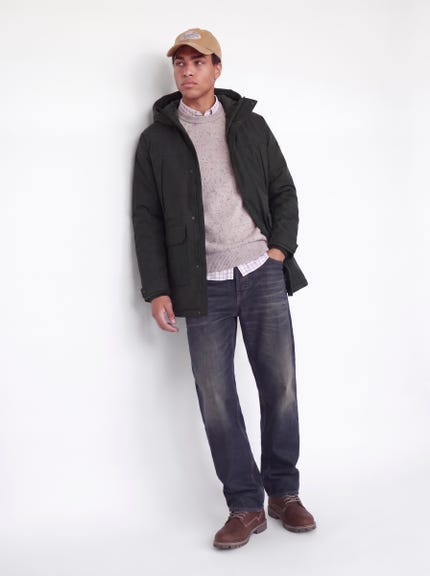
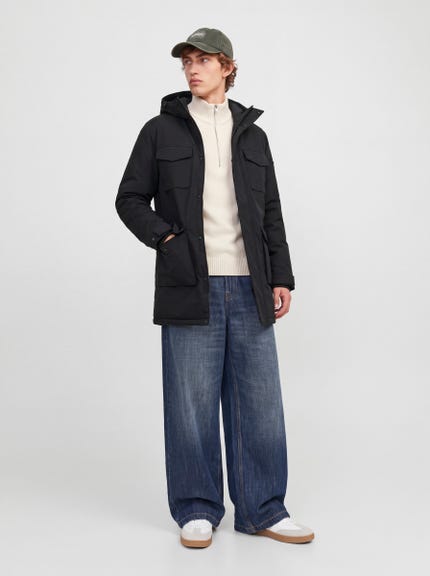
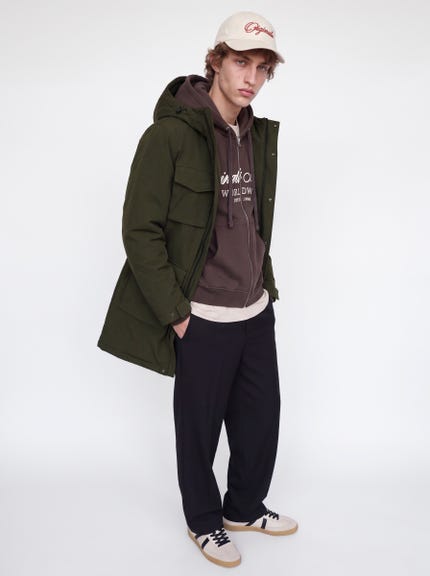
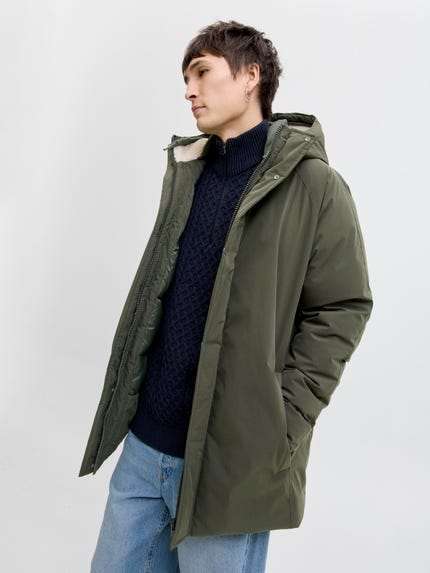
Parkas
At JACK & JONES, we are big fans of the parka. Why? Because it is one of the few jacket classics that protects you reliably from wind, cold & rain without making you look like you are wrapped in a sleeping bag. Its roots are in the US Army and the Arctic anorak, and that utility heritage is still easy to spot today.
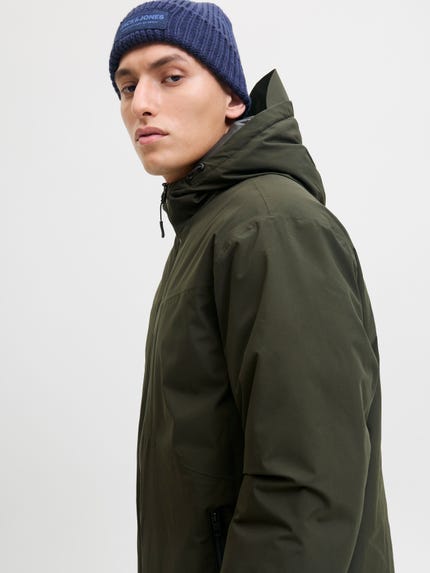
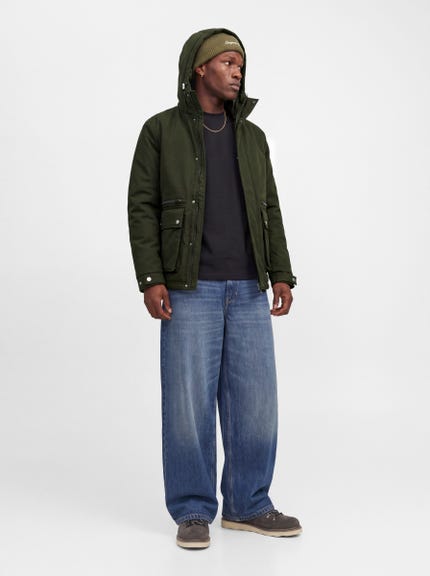
Our range of men's parkas covers everything from lightweight transitional styles to winter parkas with teddy lining, hoods & practical pockets. Add a beanie and warm shoes, and you are ready for the colder months without giving up your style.
What sets a parka apart from a regular jacket
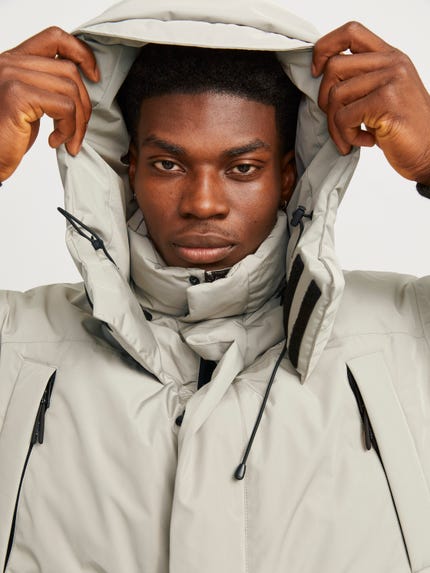
Length, hood and lining are the three features that define a parka. A parka reaches at least below the seat, has a roomy hood and, depending on the style, anything from light padding to down insulation. The difference from a bomber jacket is the length. The difference from a coat is the focus on function.
If you are deciding between categories, think about where you will wear it. A coat is the smarter choice for business appointments, while a parka works better for free time and days when the weather does not play along.
Transitional parkas for spring and autumn
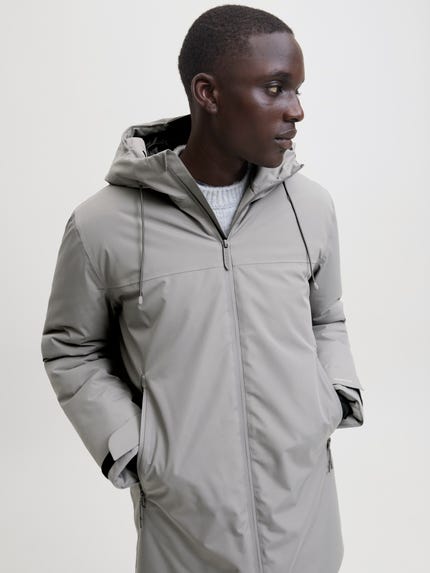
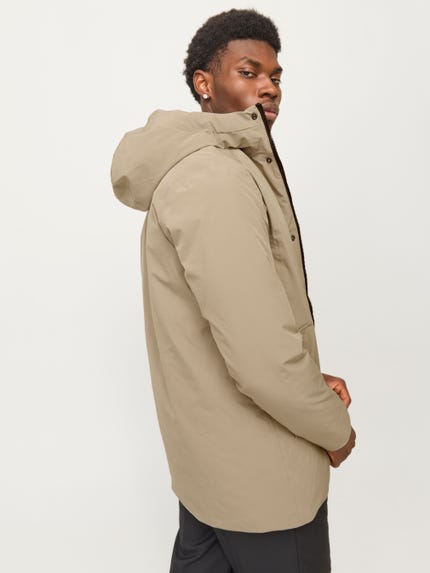
A transitional parka comes without fur or down insulation. It protects against wind and light rain, which makes it a practical choice for spring and autumn. Wear one over a sweatshirt with chinos for a look that works on days when the weather cannot quite make up its mind.
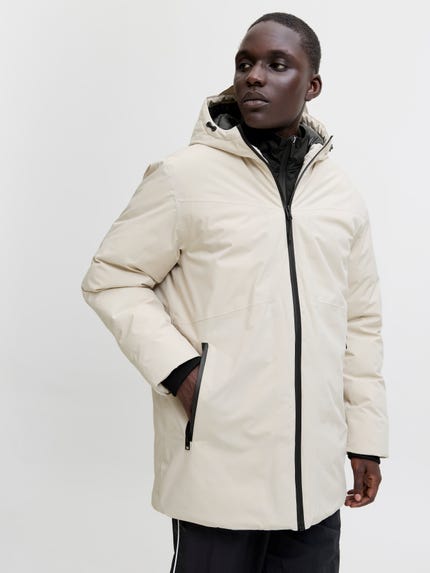
Lightweight styles also work on summer evenings when the temperature drops after sunset or the wind picks up. A transitional parka in beige or light grey feels visually lighter than its winter counterpart.
Winter parkas with fur and hoods
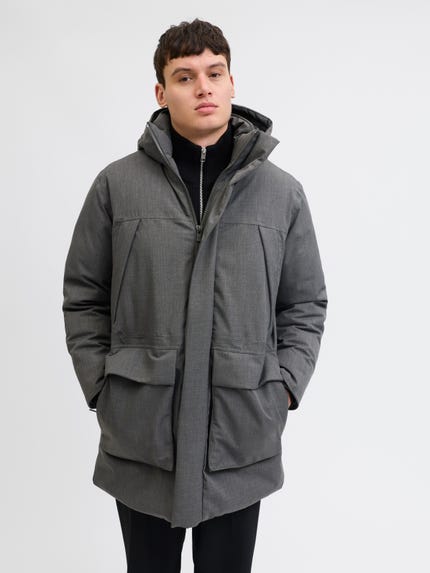
A winter parka takes things further. Think thicker insulation, often filled with down or synthetic fibres, teddy lining or removable faux fur around the hood. These styles deliver enough warmth to work in freezing temperatures, not just on mild winter days.
For men who spend a lot of time outdoors, a winter parka is one of the most reliable options for the cold season. Few other outerwear pieces combine warmth, protection from rain and freedom of movement in quite the same way.
Parka colours: green is the classic
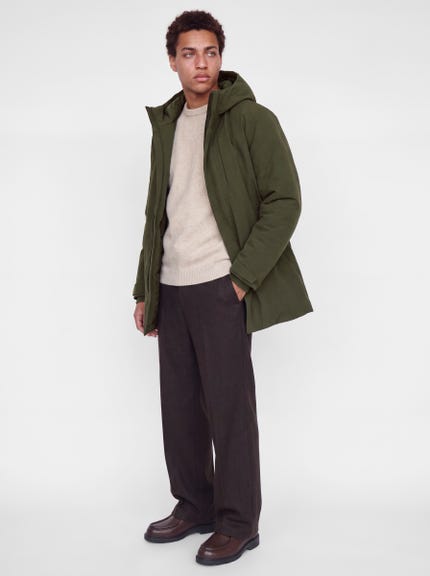
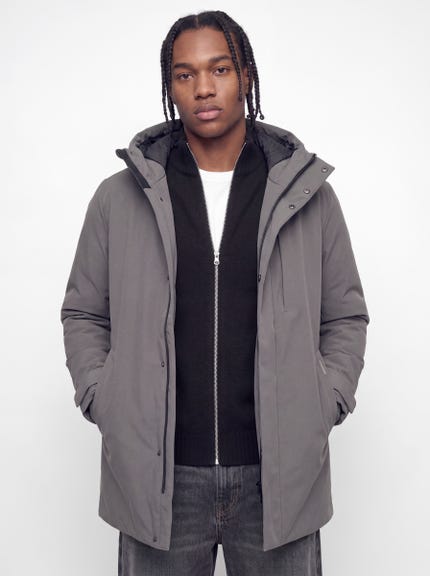
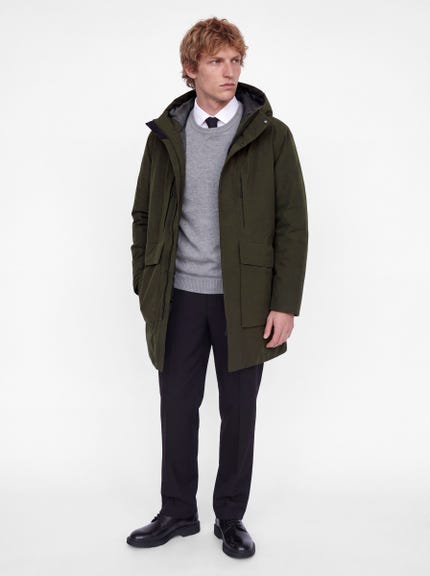
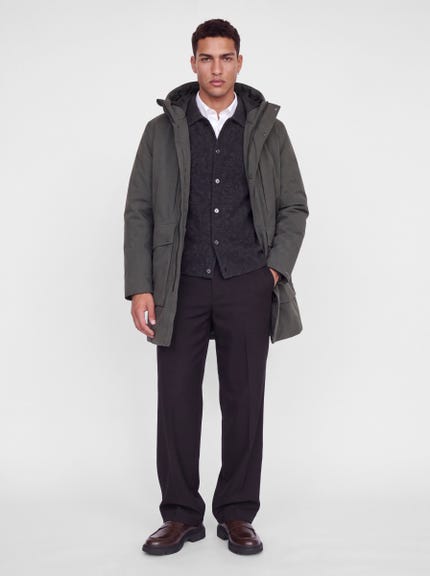
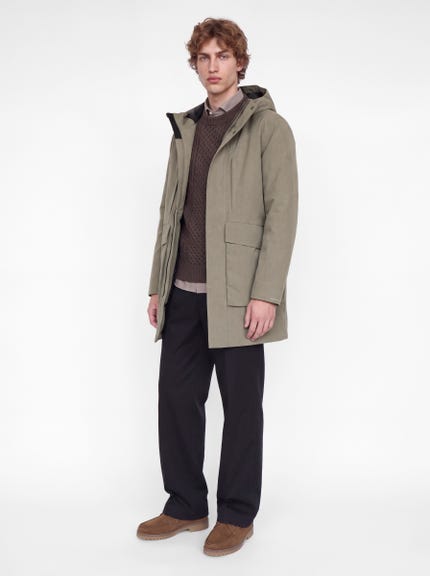
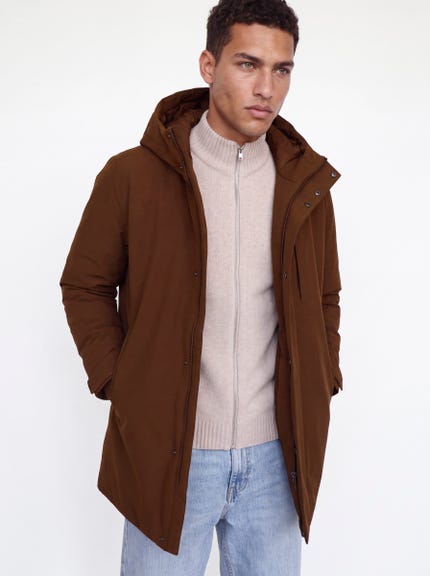
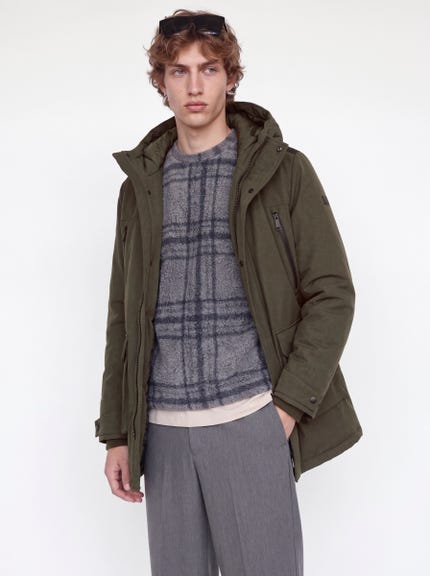
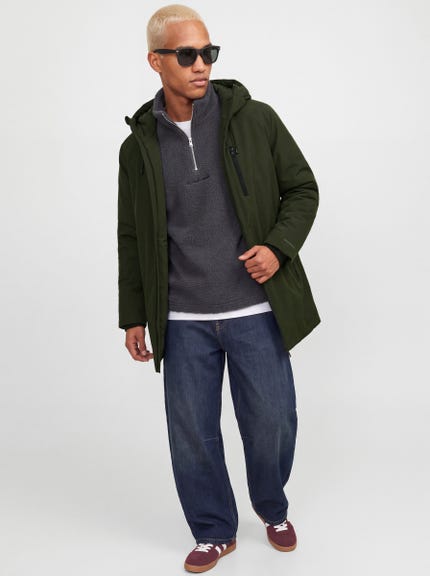
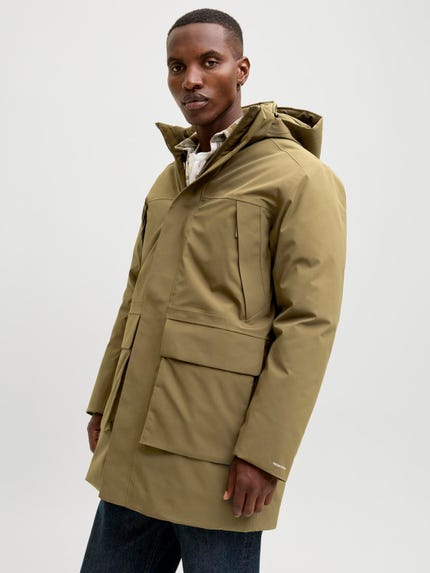
Olive green is the colour most closely linked to the parka's utility heritage. If you want to move away from the military look, go for black, navy, beige, grey or brown. All of these shades work naturally with different wardrobes and style preferences.
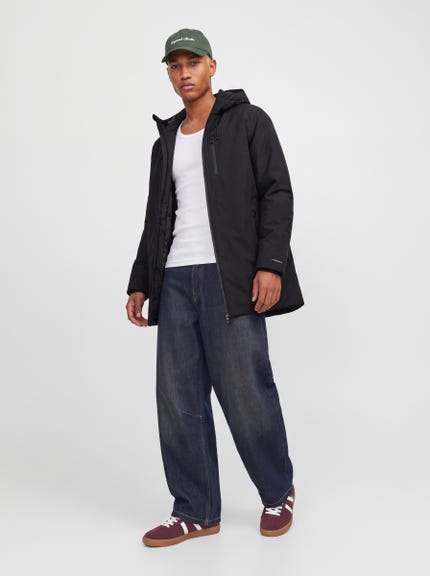
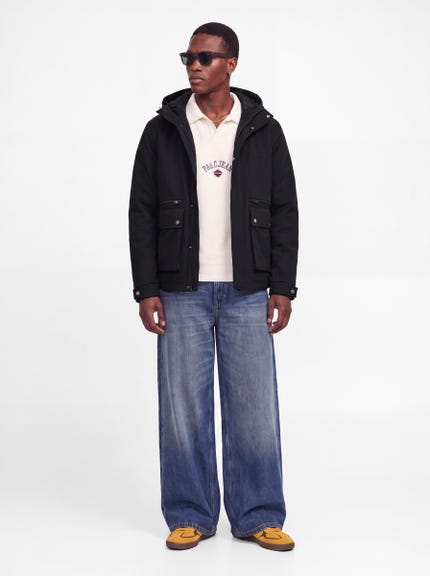
For everyday wear, black or navy is the most practical choice because both colours work with almost any pair of trousers and never feel too formal or too casual. If you want the utility feel, stick with olive green or khaki.
Details that make a difference in everyday wear
Often it is the small details that separate a good parka from an average one. These practical features can make a real difference day to day:
- Inside pockets for your phone and wallet.
- A two-way zip so the jacket does not feel restrictive when you drive.
- Drawcords at the waist and hood for a closer fit in windy weather.
- A removable hood lining that makes washing easier.
- Reinforced elbows for extra durability.
The difference between a parka and an anorak
An anorak follows a pullover construction. You pull it over your head and there is no full-length zip. A parka opens completely at the front, which makes it easier to use in everyday life. Both offer protection, but the parka wins when it comes to simple on-and-off wear.
For activities such as skiing or mountain hiking, an anorak can be the more sealed option because water cannot enter through a full front zip. For everyday use, the parka is generally the more practical choice.
Styling tips: how to wear a parka
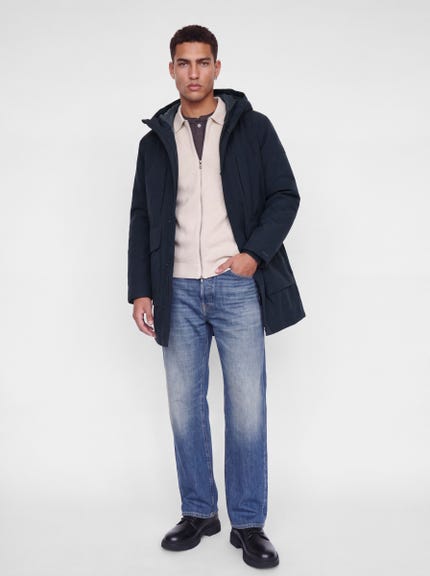
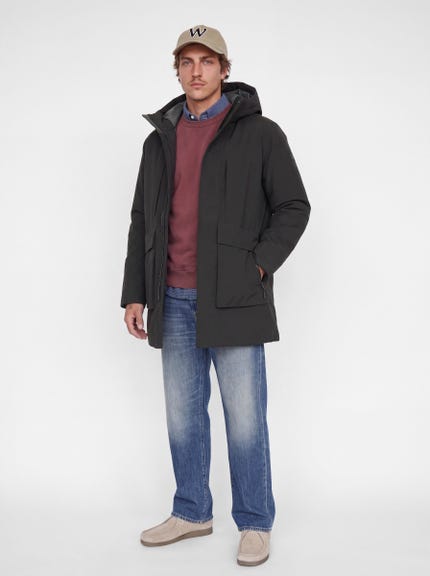
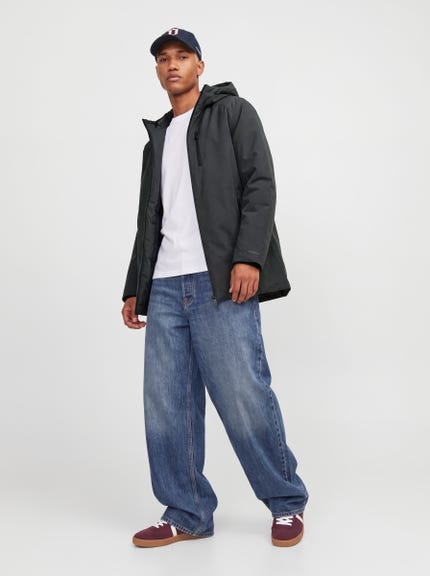
Almost any parka works with regular-fit jeans. Pair it with cargo trousers to push the utility look further. Compared with a coat, a parka is the more relaxed option for days when business-casual is not part of the plan.
To balance the silhouette, combine a voluminous parka with slimmer trousers in a slim or regular fit. Too much width on the bottom can make the overall shape feel heavier than intended.
Fit and size: how your parka should sit
A parka can sit slightly looser than a regular jacket so there is enough room for a jumper or gilet underneath. If you plan to layer heavily, going up half a size can help. Otherwise, your usual size is normally the right place to start. Find more details in our size guide.
One mistake we see often is buying a parka too small because it is tried on in-store over a T-shirt. Once winter arrives and a thick knit goes underneath, there is suddenly no room left. Always test the fit with the layers you actually plan to wear.
Care tips for your parka
Most parkas can be washed at 30 degrees. Remove faux-fur trims, loosen drawcords and only tumble dry if the care label allows it, as different insulation types react differently. For down-filled styles, specialist detergent and dryer balls can help the filling regain its loft.
With the right care, a good parka can last through many winters. At the end of the season, hang it up fully dry rather than storing it tightly in a box. Insulation needs space and air to keep performing properly.
For the really cold days
If a parka still does not feel winter-ready enough, take a look at our coats, puffer jackets and jumpers too. That gives you options for every drop in temperature. At JACK & JONES, there is always room for another winter classic.